Chewy: Pet Shopping & Delivery
- 4.8
- Rating
- 10.00M
- Installs
- Free
- Price

 Analysis by App-foxy
I installed Chewy: Pet Shopping & Delivery to see whether it feels like a genuinely useful pet-care tool or simply another shopping app with a pet-focused design. My impression is that it works best when you already know what your dog, cat, fish, bird, or other companion needs and want a simpler way to reorder it. It brings food, pharmacy items, toys, clothing, and everyday supplies into one shopping experience, but its real value depends on how comfortable you are managing purchases, delivery choices, and account information inside an app.
Chewy is a free shopping app from Chewy, Inc., aimed at pet owners who would rather handle routine purchases from a phone than make repeated trips to a store. It is rated for Everyone, and the large community around it gives the app a 4.8 average from roughly 648 thousand ratings, with more than 10 million installs. Those figures suggest that it has become a familiar option for pet households, although popularity alone does not guarantee that every part of the experience will suit you.
What the app feels like in everyday pet care
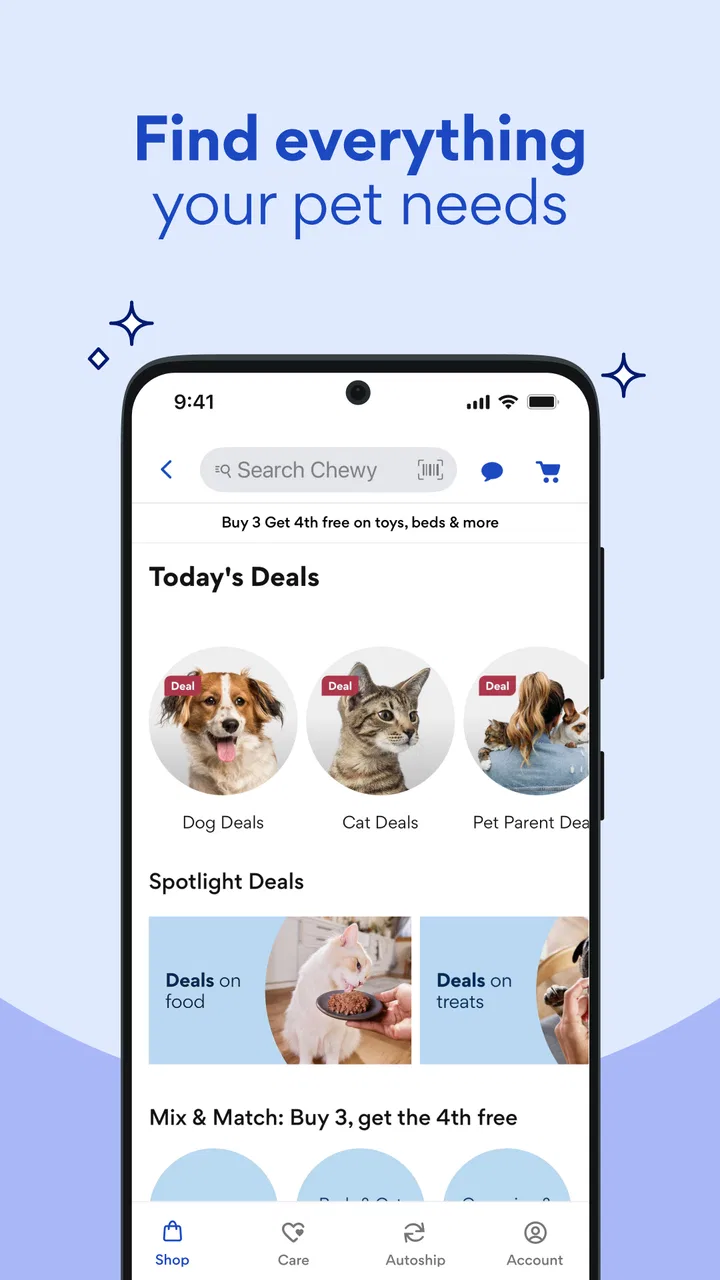
The first thing I noticed is that the app is organized around the way people actually shop for animals. Instead of treating pet products as one enormous department, it lets me think in terms of food, medication, toys, treats, apparel, and other care needs. That matters when I am shopping quickly. If my cat’s usual food is running low, I do not want to browse through unrelated products before reaching the items I recognize.
You May Also Like

 Blood Strike: 2.5 Anniversary
Blood Strike’s Loadouts Turn Every Drop Into a Tactical Gamble
A close look at Blood Strike’s custom loadouts: how fast access to signature weapons reshapes its battle royale rhythm, rewards preparation, and narrows the gap between fights.

 Pandora - Music & Podcasts
Pandora’s Music Is Easy to Start, but Harder to Recover
Pandora’s strength is its low-effort path from a seed to a station. Its weak spot is how much confidence it asks you to place in connection, setup, and quiet recovery.

 8 Ball Pool
 Is Built on Rivalries, Rematches, and Routine
A close look at the rivalries, rematches, shared routines, and unanswered safety questions that turn a quick pool match into a persistent mobile community.

 Samsung Music
’s Quiet Strength Is Playing What You Already Own
Its reach comes less from spectacle than from dependable access to a personal library. That simplicity is both the app’s strongest retention engine and its ceiling.

 AccuWeather: Weather Radar
AccuWeather Review: A Quick, Clear Forecast for Everyday Decisions
For everyday plans, the best forecast is the one you can understand quickly. AccuWeather makes rain timing, radar, and local conditions easy to act on, with a few trade-offs.

 Hill Climb Racing
Why Hill Climb Racing Still Turns Crashes Into One More Run
A tiny car, a bumpy hill and one more upgrade: Hill Climb Racing keeps resurfacing because its simple chaos makes every near-miss feel personal.
More From Our News Desk
View All News


For a regular household, the strongest use case is repeat shopping. Pet food and litter are not occasional purchases, so a mobile store becomes more useful when it helps me return to familiar products rather than start from scratch every time. I can use the app to compare options, check product details, and build an order around a specific pet’s routine. That is more convenient than remembering several separate store aisles or switching between different retailers.
I also found the broader selection useful when a normal food order turns into a larger restock. A single visit can cover treats, a new toy, grooming-related supplies, bedding, clothing, or pharmacy products. This is where Chewy feels more focused than a general marketplace: the shopping context stays centered on animals, so the recommendations and categories are less distracting than the mixed inventory of a broad online retailer.
A realistic example is a busy weekday evening. I might notice that the last bag of food is nearly empty, remember that litter is also low, and realize that a recently adopted pet needs a basic accessory. With Chewy, I can handle those needs in one session instead of making a separate trip for each item. The convenience is not dramatic for one small purchase, but it becomes meaningful when several recurring supplies need attention at once.
Where the shopping workflow saves time
I recommend starting with the pet rather than with a broad search whenever the app gives me that choice. A pet-centered approach helps reduce the chance of choosing a product that looks similar but is intended for a different animal, life stage, size, or dietary need. I still read the product information carefully, but beginning with the correct shopping context makes the process less mentally tiring.
One useful habit is to treat the first order as a reference point. I pay attention to the exact product name, package description, flavor, size, and any special formulation before buying again. This is especially important for pets with sensitive stomachs or strict diets. A product image can look familiar while the actual variant is different, and the app cannot replace my responsibility to check the details.
Another practical workflow is separating essential items from browsing items. I handle food, litter, and medication-related purchases first, then look at toys or apparel only if the budget and delivery timing make sense. That keeps a routine order from becoming an impulse-shopping session. Chewy makes it easy to explore additional categories, which is convenient, but that convenience can also encourage me to add things my pet does not really need.
The pharmacy section is potentially valuable for owners who already know what care products they are looking for, but I would approach it more carefully than a toy or treat purchase. Medication decisions should come from a veterinarian or an established treatment plan, not from an attractive product page. I use a pet-shopping app to organize a known need, not to diagnose an animal or replace professional advice.
What I would check before placing an order
Chewy is most comfortable for planned shopping, not urgent needs. If my pet needs something immediately, a nearby veterinary clinic, pharmacy, or physical pet store may be the better choice. Delivery adds convenience, but it also adds waiting, and a mobile storefront cannot remove the risk that a shipment may arrive later than I hoped or that I may discover an item is not suitable after ordering.
I also check the order summary slowly before confirming. The important questions are simple: Is this the right product for the right animal? Is the quantity sensible? Is the address correct? Do I understand the delivery arrangement? These checks sound obvious, but they are particularly important when I am reordering from memory or shopping while distracted.
For households with several pets, I find it helpful to keep a small note outside the app with each animal’s food, size, and restrictions. That may sound old-fashioned, but it prevents confusion when two pets have similar products or when one needs a different formula. The app can make shopping easier; it cannot know every detail of my animals’ routines unless I actively verify them.
Trust, account choices, and the moments that deserve attention
My trust in a shopping app comes less from its friendly appearance than from the choices it gives me before I buy. With Chewy, I look closely at the account and checkout screens rather than assuming that convenience means I should accept every available option. I want to know what I am selecting, what information is needed to complete the purchase, and whether an optional choice is clearly different from a necessary one.
This is especially relevant when shopping for pharmacy products or setting up an account for a pet with ongoing care needs. Those moments can involve more personal and household information than buying a toy. I take a pause before entering anything sensitive, review the visible fields, and avoid adding details that are not needed for the task in front of me. That is a sensible habit in any shopping app, and it keeps me in control of the information I choose to share.
I also review notification and communication choices instead of treating them as background settings. Order updates can be useful, particularly when I am waiting for food or litter, but not every promotional message deserves the same access to my attention. If the app presents separate choices for practical updates and marketing communication, I prefer to keep the useful alerts and reduce the rest. The key point is to make that decision consciously.
Account control matters after the purchase as well. I check order details, saved information, and any recurring arrangement before assuming that everything is a one-time transaction. A repeat-purchase tool is helpful only when I understand what will happen next. If I do not recognize an option, I would rather stop and inspect it than continue simply because the checkout flow is fast.
Data-sensitive shopping situations
The most sensitive moments for me are not browsing toys or comparing beds. They are creating an account, entering delivery information, dealing with pharmacy-related products, and choosing whether to receive ongoing communications. Those steps deserve more attention because they connect the app to my household, my payment process, and potentially my pet’s care routine.
I do not infer privacy or security promises from the app’s design alone. A clean interface can still require careful decisions, so I rely on the permission prompts, account screens, and choices that are actually shown to me. When a request appears, I ask whether it supports the action I am trying to complete. If it does not seem necessary, I avoid granting access casually and look for a way to continue without it when the app allows that choice.
Location access is a good example of this cautious approach. A shopping app may be useful without knowing my precise location, depending on how I use it. I would rather enter delivery information directly than grant broader access automatically, unless I clearly understand why location would improve the task. The same principle applies to notifications: I allow practical order communication when it helps, but I do not consider every alert essential.
I am also careful with shared devices. If several people in a household use the same phone or tablet, I review whether the account remains signed in and whether order information is visible to someone else. A pet-shopping account can contain addresses, purchase history, and household details, so signing out or using the device’s normal protection is sensible when privacy matters.
Who will get the most from Chewy
I think the app is a strong fit for pet owners who buy recurring supplies, prefer home delivery, and want a pet-specific catalog rather than a general marketplace. It is also useful for people caring for multiple animals, because combining categories in one shopping session can reduce the number of separate orders and errands.
It may suit new pet owners who are still learning which supplies belong together, provided they take time to read product information instead of relying on pictures or popularity. The category structure can make exploration less overwhelming than walking through a large store without a plan. I would still ask a veterinarian or experienced professional about food, supplements, and medical products when an animal has special needs.
People who need pharmacy-related items may appreciate having those products alongside ordinary supplies. My advice is to use that convenience as an organizational aid, not as a substitute for veterinary guidance. For an ongoing prescription or a medically complicated pet, the better choice may be whichever provider gives the clearest professional support and the most dependable fulfillment for that specific treatment.
Who should choose another option
I would not make Chewy my only option if I regularly need something immediately. A local store is still better for a same-day need, an emergency replacement, or a product I want to inspect physically before buying. Delivery shopping is designed for planning, and even an excellent catalog cannot match the immediacy of walking out of a nearby shop with the item in hand.
I would also be cautious if I dislike creating retail accounts, receiving shopping notifications, or managing online order details. The app is built around a connected shopping relationship, so someone who wants occasional anonymous purchases may feel more comfortable buying directly in person. Likewise, a person who already has a trusted local supplier for specialized food or medication may gain little by moving that routine into another app.
Price comparison is another reason not to rely on one retailer automatically. Chewy may be convenient for assembling a pet-care order, but I still compare the final cost, delivery timing, package size, and product suitability with local stores and other familiar options. The cheapest unit price is not always the best deal if I need the item quickly, while the most convenient order is not necessarily the most economical for a tight budget.
My practical verdict after using it
Chewy: Pet Shopping & Delivery is a focused shopping app that earns its place on my phone when pet supplies are a recurring part of life. I like the way it brings everyday food and care items together with toys, apparel, and pharmacy products, and I find the pet-centered organization more useful than a generic marketplace when I already know what I need.
Its best quality is not that it makes every pet decision effortless. It is that it reduces the friction around routine purchasing while leaving me room to compare, check, and decide. That distinction matters. The app is most trustworthy when I use its convenience without surrendering my own checks. I review product variants, delivery details, account choices, and communication settings instead of tapping through automatically.
The app has been available since December 2016, and version 26.7.0 supports devices running Android 7.0 or later. Those details make it accessible to many Android users, while the free price removes a separate download cost. I would still judge it by my actual shopping habits rather than by age or popularity: if I need regular delivery and a broad pet catalog, it is worth trying; if I need immediate local service or highly specialized professional care, another option may serve me better.
My recommendation is therefore positive but measured. I would suggest Chewy to a friend who wants one place for planned pet shopping and is willing to stay attentive during account, pharmacy, and checkout steps. I would not suggest treating it as a replacement for a veterinarian, an emergency supplier, or personal judgment. Used as a practical purchasing tool—with notifications, permissions, and saved information handled deliberately—it can make the repetitive side of caring for pets noticeably easier.
FAQs for Chewy: Pet Shopping & Delivery
01What is Chewy: Pet Shopping & Delivery?
Chewy: Pet Shopping & Delivery is an app designed to make pet care convenient by offering a wide range of pet products available for purchase and delivery. From food and treats to toys and medications, the app provides a comprehensive selection tailored for various pet needs, ensuring you can easily shop for your furry friends.
02How does the delivery process work with Chewy?
Chewy offers fast and reliable delivery services for all your pet care needs. Once you place an order, you can expect quick processing and shipping. The app allows you to track your order in real-time, ensuring you know exactly when to expect your delivery. Most orders arrive within 1-3 days, depending on your location.
03Are there any subscription options available on Chewy?
Yes, Chewy provides the option to set up Autoship subscriptions, allowing you to schedule regular deliveries of pet supplies. This feature is particularly useful for items you purchase frequently, such as food or medications. Autoship offers convenience and often includes discounts, ensuring you never run out of essential items for your pets.
04What payment methods does Chewy accept?
Chewy accepts several payment methods to make your shopping experience seamless. You can pay using major credit cards such as Visa, MasterCard, American Express, and Discover. Additionally, Chewy also accepts PayPal, offering flexibility and security in your transactions. Ensure your payment details are up-to-date for an uninterrupted shopping experience.
05What should I do if I receive a damaged or incorrect item from Chewy?
If you receive a damaged or incorrect item, Chewy's customer service is ready to assist you. Contact them immediately through the app or their website. Chewy is known for its excellent customer service and will typically offer a replacement or refund. Always report issues as soon as possible to ensure a quick resolution.
Pros
- Extensive range of pet products available.
- User-friendly interface with easy navigation.
- Convenient auto-ship feature for regular orders.
- Responsive customer support service.
- Frequent discounts and special offers.
Cons
- Occasional delays in delivery times.
- Some items may be out of stock.
- Limited customization in search filters.
- No international shipping options.
- Occasional app crashes reported.

Chewy: Pet Shopping & Delivery
Gallery